
Why We’re Transitioning to Pioneer Chickens at Lord-Cranmer Farm
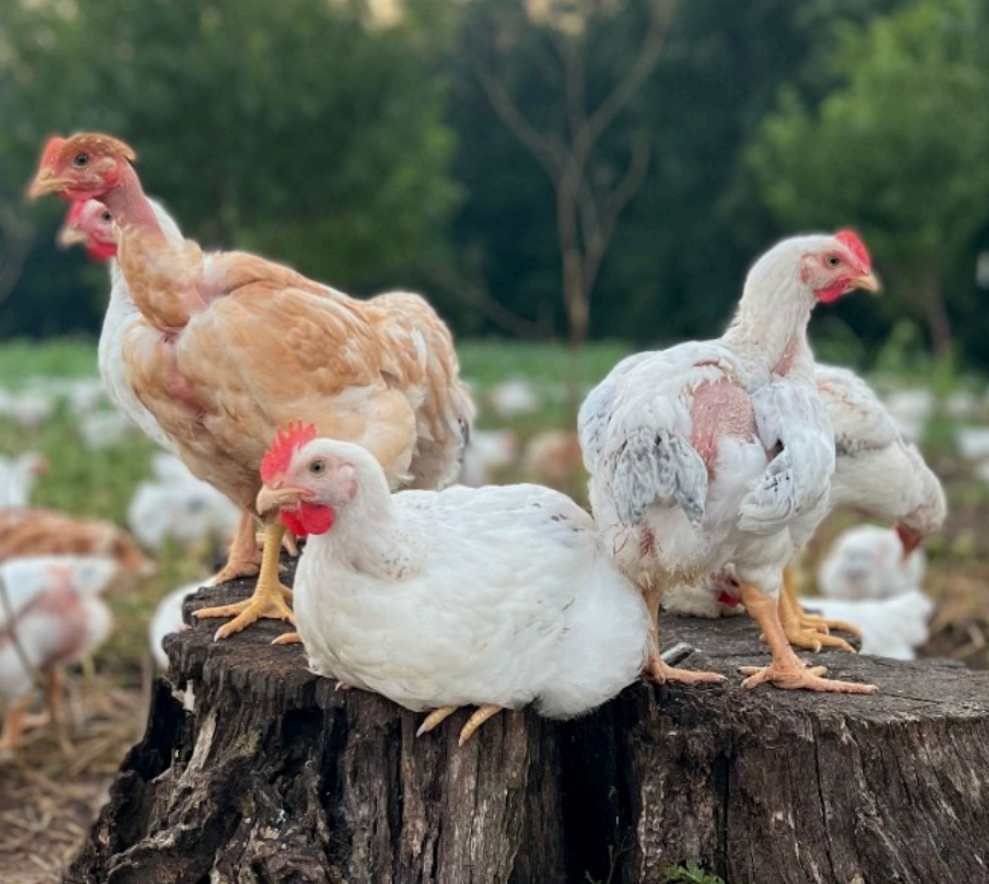
Photo From Metzer Farms: https://www.metzerfarms.com/pioneer-chicken.html
At Lord-Cranmer Farm, every decision we make comes back to one thing: are we producing better food, in a way that truly reflects the land we farm?
After a lot of thought and observation, we’ve decided to transition from Cornish Cross broilers to Pioneer Chickens. This isn’t a reactionary change or a marketing move. It’s a shift toward a bird that better fits how we believe chicken should be raised—on pasture, at a natural pace, with nutrition that comes from more than just a feed ration.
For a long time, the Cornish Cross has been the standard in meat production. It grows quickly, converts feed efficiently, and produces large, uniform birds. There’s a reason it dominates the market. But that efficiency is built around speed, and speed comes with tradeoffs. These birds are designed to grow rapidly, often reaching processing weight in just a few weeks. In many cases, their bodies are pushed so quickly that farmers have to manage feed carefully just to keep their structure and health in balance.
On pasture, those limitations become more apparent. Cornish Cross birds tend to be less active, less inclined to forage, and more dependent on formulated feed. They can live on pasture, but they don’t fully use it. For us, that matters. If pasture is going to be central to our system, the bird has to participate in it.
That’s where Pioneer Chickens come in. They represent a different philosophy entirely. Instead of being bred for maximum speed, they’re bred for balance. They grow more slowly, but in doing so, they develop properly—strong bones, healthy organs, and well-formed muscle. They’re active, curious, and built to live outdoors.
What we’ve seen, and what drew us to this breed, is how they interact with the pasture. These birds actually forage. They move across the field, scratching and pecking, eating insects, seeds, and plant matter. That behavior changes everything about how they’re nourished. Instead of relying solely on feed, they build their diet from multiple sources—grain, forage, and the natural biology of the pasture itself.
That diversity shows up in the meat. Pasture-raised chickens that actively forage tend to have higher levels of beneficial fats like Omega-3s, along with increased vitamins such as A and E. But beyond the measurable nutrition, there’s something else that’s harder to quantify and easier to taste. The flavor is deeper. The texture is firmer. It tastes like chicken used to taste.
Slower growth also plays a role here. When a bird isn’t rushed, muscle develops differently. It holds moisture better, it has more structure, and it carries flavor in a way that fast-grown birds simply don’t. You’re not just getting more meat, you’re getting better meat.
Another important piece of this transition is resilience. Pioneer Chickens are hardy. They handle heat better, they have strong immune systems, and they aren’t as prone to the structural and metabolic issues you often see in fast-growing breeds. That means less intervention, less stress on the flock, and a system that works more naturally over time.
And then there’s the land itself. Our goal has always been to build a system where the animals improve the ground they live on. Chickens on pasture aren’t just producing meat, they’re fertilizing, stimulating plant growth, and contributing to soil health. But that only works if the birds are active participants. A bird that moves, forages, and engages with its environment creates a completely different impact than one that doesn’t.
Pioneer Chickens do that work with us.
For you, this change will be noticeable. The chicken will cook a little differently. The texture will be more natural, a bit firmer. The flavor will be richer and more developed. It may not look exactly like what you’re used to from the grocery store, but that’s the point. It’s a product of a different system.
At the end of the day, this shift brings us back into alignment with what we’re trying to build here. A farm where pasture is not just an access point, but the foundation. Where the animals are suited to the system. Where nutrition starts with the land.
We’re not interested in growing the fastest bird.
We’re interested in raising the right one.